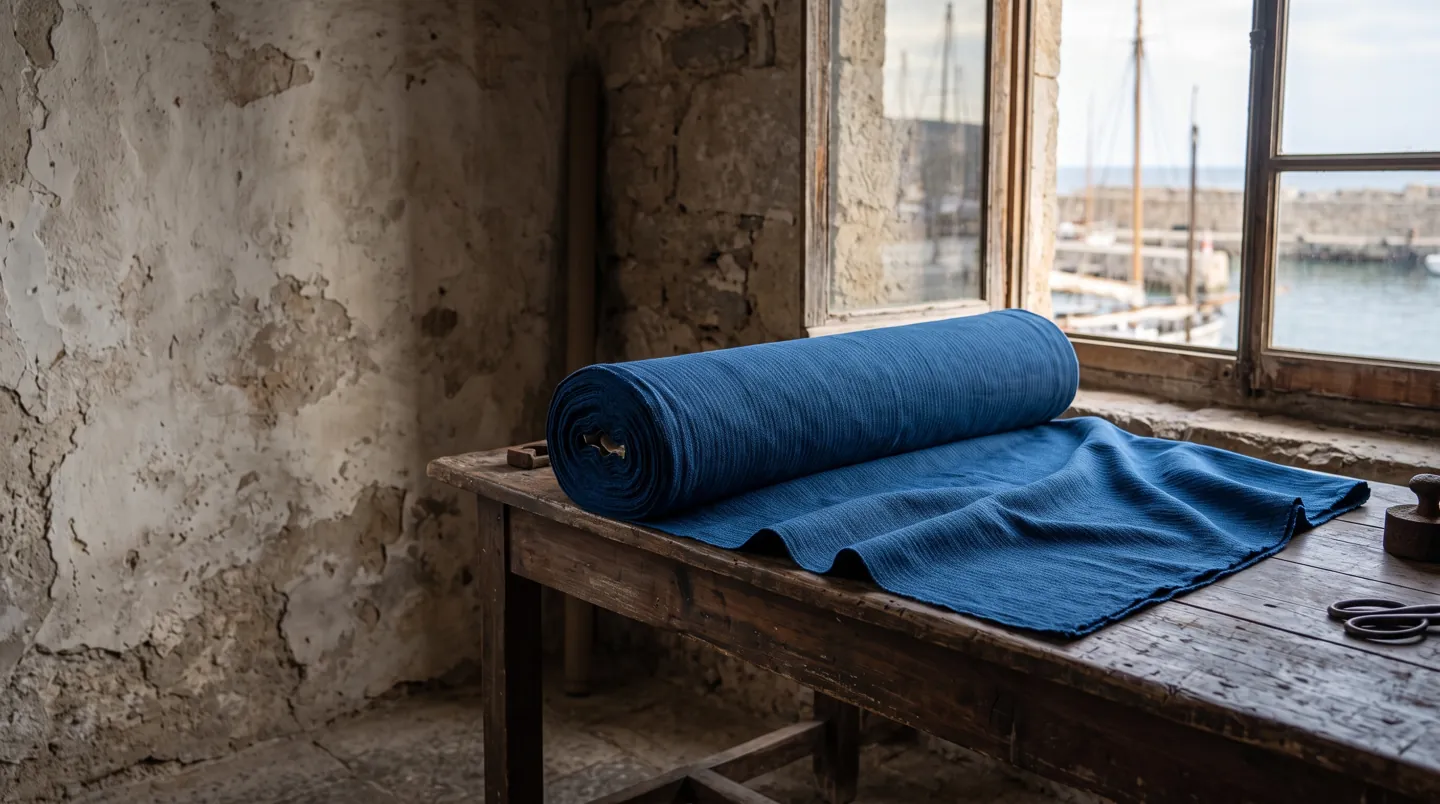
Jean was a fabric before it was a pair of trousers.
From the middle of the 1500s, Genoa made a sturdy cotton fustian. Shipped to England, it took the name of the port it came from: Gênes, the French name for Genoa, which became jean.
Pick a cloth name to see what it meant. The bar shows how close it sits to the blue denim most people now call jeans.
Descriptions from the Musée du Vieux Nîmes material on Nîmes Tourisme, Aratoi museum and Italy's official tourism site.
TWO NUMBERS WORTH KNOWING
An early blue, kept in a cloister.
Genoa's Diocesan Museum keeps painted blue canvases that it calls ancestors of the jeans cloth.
14
Painted indigo cloths in the museum
The Diocesan Museum holds 14 canvases of indigo-dyed linen and cotton, painted in lead white with scenes of the Passion partly based on Dürer's Small Passion engravings.
THE PASSION CANVASES · GENOA
150+ years
Older than the English record
The museum says the first canvases are more than 150 years older than the first document recording whitt jeanes, an old spelling of white jeans, in Richmond.
HOW EARLY · GENOA
Visit Genoa dates the canvases to 1538. They came from the Abbey of San Nicolò del Boschetto in Val Polcevera and belong to Italy's Ministry of Culture.
FOUR WAYS TO SEE THE STORY
Look closely at the cloth.
You do not need a museum trip to start. A pair of jeans and a little attention show most of what the history describes.
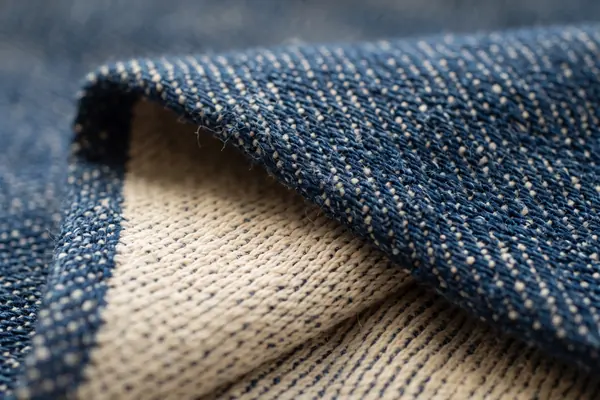
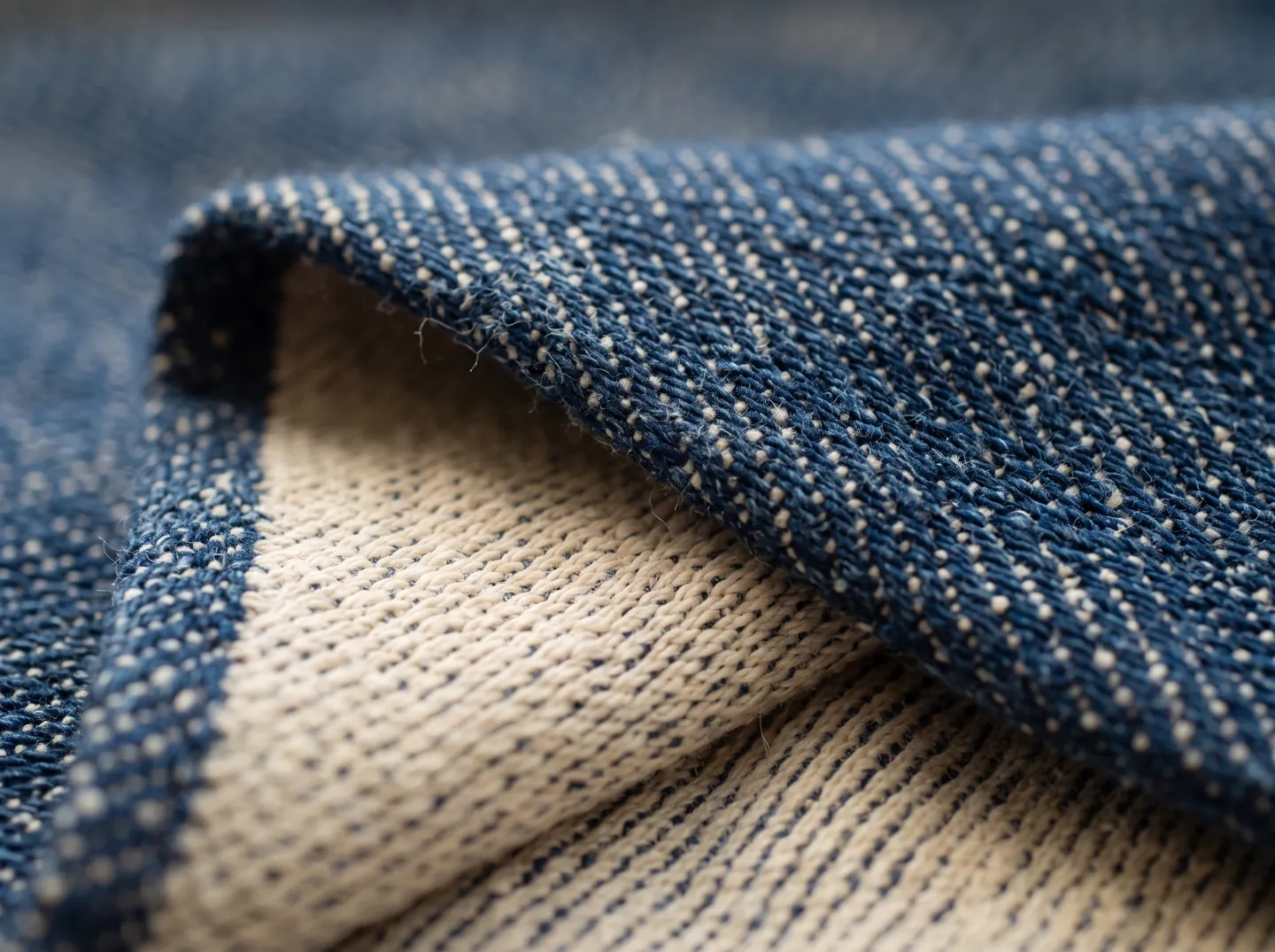
Turn a leg inside out
On denim the inside is paler than the outside, because the blue and undyed threads run in different directions.
Follow the diagonal
Twill weaves leave fine diagonal lines on the face of the cloth. Jean, serge and denim are all twills.
Read the word aloud
Say Gênes, the French name for Genoa, and you can hear how English ears made it jean.
Visit the canvases
The Passion canvases are shown at the Diocesan Museum in the cloister of Genoa's San Lorenzo Cathedral.
AI-generated image, not a photograph of a real person or place.AI-generated image, not a photograph of a real person or place.
FOUND IN A CHEST
Folded away for five centuries.
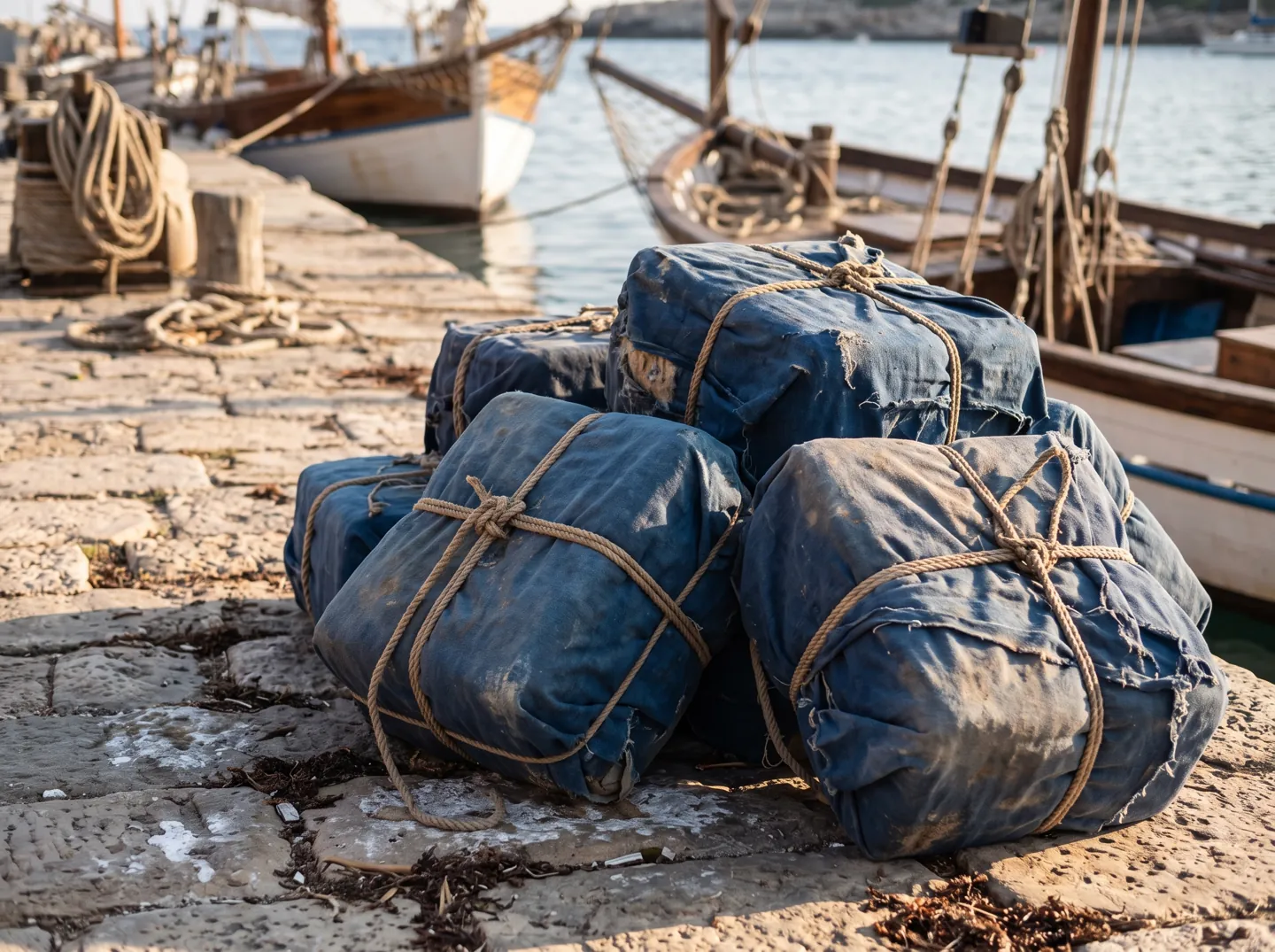
Italia.it says that when scholars opened chests about five centuries old in June 2001, they found metres of blue cloth folded with care. The Italian state bought the canvases in 2001.
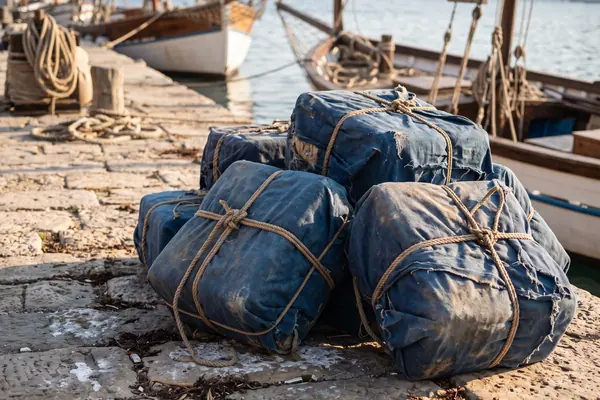
Recent studies suggest the canvases made up a temporary Holy Week setting in a church, a small chapel for worshippers. Even the ties that held their weight are of the same cloth.
Questions
Questions people ask
Why are jeans called jeans?
The word comes from Genoa. Italy's official tourism site says goods from the city were marked Gênes, its French name, which the English turned into jean and then jeans.
Is jean the same as denim?
Not historically. Nîmes Tourisme says jean is the name of a plain twill fabric, while denim is cotton twill woven from indigo-dyed and unbleached yarns.
Where does the word denim come from?
It may be a contraction of de Nîmes. The French city made a twill called serge de Nîmes, spun from wool and/or silk, and was known for the quality of its fabrics.
What is fustian?
The historic name for cloth with a linen warp and a cotton weft. Genoa's jean was a fustian, and during the Industrial Revolution fustian was made in Lancashire.
Can I see early jean cloth today?
Yes. Genoa's Diocesan Museum shows 14 Passion canvases of indigo-dyed linen and cotton, which it describes as among the oldest ancestors of the Genoese jeans cloth.